Palisade fencing is one of the most widely used perimeter security solutions in the world. Known for its strength, durability, and versatility, it is commonly found in industrial sites, commercial properties, utilities, transport hubs, and even high-end residential areas. This guide provides a detailed overview of palisade fencing, including its design, types, benefits, installation, and best practices.
Palisade fencing is a type of steel fencing constructed from vertical steel pales fixed to horizontal rails, which are in turn secured to strong vertical posts. The vertical pales are typically designed with pointed, splayed, or rounded tops to prevent climbing and deter intruders.
The primary purpose of palisade fencing is perimeter security, but it also defines property boundaries clearly while offering durability and low maintenance compared to other fencing options. Its modular construction allows for easy installation, expansion, or replacement, making it highly adaptable to different project requirements.
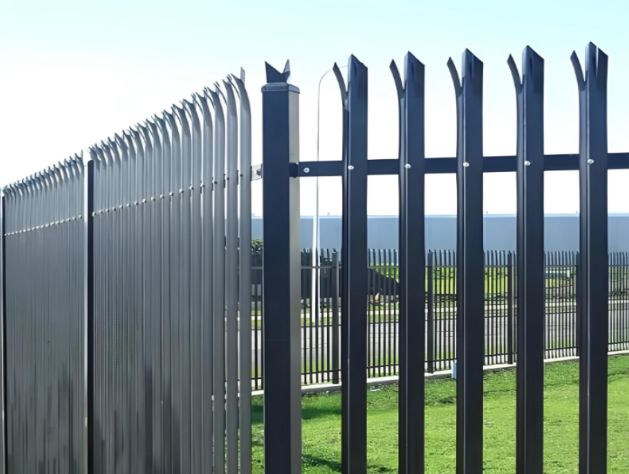
Palisade fencing can be classified based on the pale profile, pale-head style, and security level.
W-Section Pales: Strong and robust, ideal for high-security applications. Their unique W-shaped profile provides intrinsic strength and resistance to bending or cutting.
D-Section Pales: Suitable for medium-security applications. They offer a good balance of strength and aesthetics, often used for commercial or residential boundaries.
Angle-Section Pales: More economical and basic, commonly used for general property demarcation or low-risk areas.
Single-Point (Spear-Top): Simple pointed design to deter climbing.
Triple-Pointed or Multi-Spike: Enhances security by making it almost impossible to scale.
Rounded or Notched Tops: Safer and visually softer, ideal for residential areas or public spaces.
Flat-Top (Square): A minimalistic design suitable for moderate security needs.
High-Security: W-section pales with multi-spike heads, often used in industrial facilities, airports, and utility installations.
Medium-Security: D-section pales with single-point tops, suitable for commercial or residential properties.
Low-Security: Angle-section or D-section with flat or rounded tops for general boundary marking or aesthetic purposes.
Exceptional Security: Vertical steel pales and pointed tops make climbing or forced entry extremely difficult.
Durability: Galvanized and powder-coated steel resists rust, corrosion, and harsh weather, offering a long lifespan.
Visibility: Provides clear sightlines for surveillance and monitoring without obstructing views.
Low Maintenance: Requires minimal upkeep compared to timber or chain-link fencing.
Customizable Design: Profiles, heights, colors, and head styles can be tailored to match security and aesthetic requirements.
Deterrent Effect: The intimidating design deters potential intruders or vandals.
Modular and Flexible: Prefabricated panels allow easy installation, expansion, and replacement.
Cost-Effective: Offers long-term value due to durability and low maintenance.
Most palisade fences are made from galvanized steel, which prevents rusting and enhances structural integrity. For additional protection and aesthetic appeal, fences can be powder-coated in various colors. Pales typically range from 2mm to 3mm in thickness, and heights can vary from 1.2 meters to over 3 meters, depending on the security requirement.
Site Survey: Assess the terrain, boundary layout, and potential security risks before installation.
Post Installation: Strong vertical posts are anchored into the ground, typically using concrete for stability.
Panel Attachment: Horizontal rails and vertical pales are attached to posts, creating a continuous fence line.
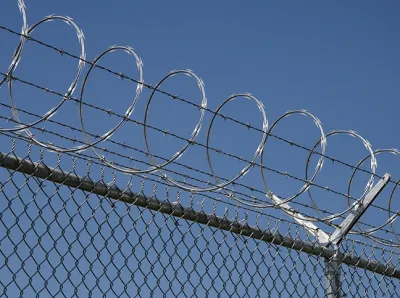
Optional Security Features: Razor wire, CCTV, or alarm systems can be integrated for enhanced security.
Maintenance Planning: Schedule regular inspections to check for damage, rust, or loosening of panels.
Industrial Sites: Factories, warehouses, and manufacturing facilities.
Utilities: Power plants, water treatment plants, and substations.
Transportation Hubs: Airports, railway stations, and ports.
Government and Military: Sensitive infrastructure and restricted areas.
Commercial Properties: Offices, shopping centers, and business parks.
Residential: Estates and gated communities for boundary definition and security.
Choose the pale profile and head style based on the security requirement.
Consider the environment: for coastal areas, higher-grade galvanization or marine coatings may be needed.
Combine fencing with surveillance and lighting for optimal security.
Ensure proper spacing of posts and secure anchoring for maximum stability.
Regularly inspect and maintain to extend lifespan and maintain security standards.
Palisade fencing offers a unique combination of strength, durability, visibility, and versatility that makes it a top choice for a wide range of applications. By carefully selecting the pale profile, head style, height, and finish, property owners can achieve a balance between security, aesthetics, and cost-effectiveness. Whether for high-security industrial sites, commercial properties, or residential boundaries, palisade fencing provides a long-term, reliable solution for perimeter protection.
Latest Post