Palisade fencing is a robust form of steel perimeter fencing widely used for security purposes. It consists of vertical steel pales attached to horizontal rails, which are in turn fixed to strong vertical posts.
Thanks to its vertical, tightly spaced pales — often topped with pointed or curved heads — palisade fencing is much harder to climb or cut through than traditional wire‑mesh or chain‑link fences. For this reason, it is often chosen for high‑security sites such as industrial facilities, utility installations, transportation hubs, and other critical infrastructure.
Beyond just security, palisade fences also offer long-term durability, lower maintenance, and a clear visible boundary — often making them a cost-effective perimeter solution over time.
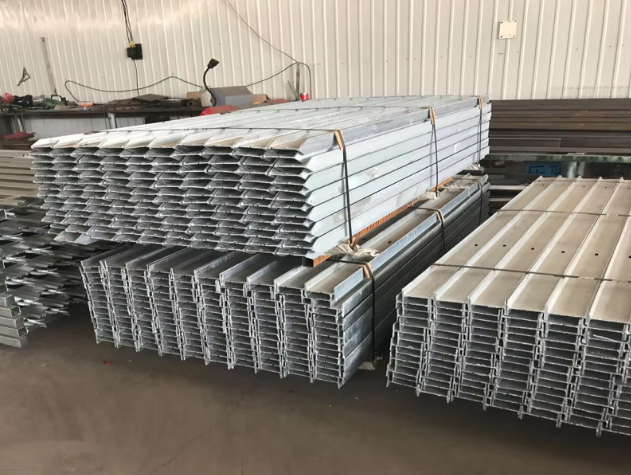
One of the main ways to classify palisade fencing is by the cross-sectional profile of the vertical pales. The most common profiles are:
W‑section pales
D‑section pales
Angle‑steel (or “angle”) pales
W‑section pales are widely used, especially for high-security fencing, because this profile gives good intrinsic strength and makes the fence more resistant to vandalism or forced entry. They are often the default choice when security is a priority.
D‑section pales are typically used for medium or low-security applications, or where a strong but less aggressive fence is acceptable — for example, to define property boundaries or for residential/commercial perimeter fencing. They tend to be less robust than W‑section pales, but still provide a secure, durable barrier.
Angle-section pales provide a more basic and economical form of palisade fencing. These may be more suitable for general boundary fencing, residential perimeters, or applications where heavy-duty security is not critical.
Another important classification of palisade fences is based on the style of the top/head of each pale. The top shape plays a key role in the fence’s defensive or aesthetic characteristics. Common head styles include:
Single Point (Spear‑Top) — a pressed or tapered pointed top. Offers anti-climb deterrence while maintaining a somewhat softer look.
Triple‑Pointed & Splayed (Multi‑Spikes) — used when enhanced deterrence is desired. The multiple pointed heads make climbing very difficult.
Rounded or Round & Notched Tops — less aggressive; sometimes chosen for aesthetics or safety considerations in public areas.
Square (Flat‑Top) — a plain, flat head, chosen for a simple, clean appearance where security needs are moderate.
The choice of head style affects both the security level and appearance of the fence — pointed or multi-headed pales offer maximum deterrence, while rounded or flat heads prioritize safety or aesthetics.
Besides section type and head style, there are several other variables that influence the final fencing solution:
Materials and Finish: Most palisade fences are made from galvanized steel, often with optional powder coating to improve weather resistance, durability, and aesthetic flexibility.
Fence Height & Pales Thickness: Palisade fences come in many heights (commonly from ~1.2 m up to 3.0 m or more), and the thickness of pales varies depending on security needs.
Fence Panels & Modular Construction: Many palisade fences are supplied as modular panels — typically around 2.75 m wide — making transport, installation, and replacement easier.
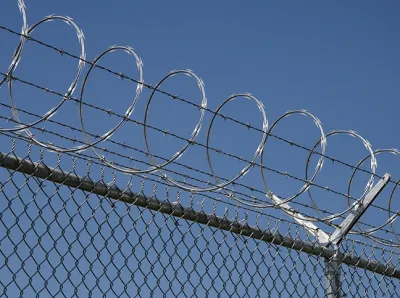
Customization & Additional Security Features: Palisade fencing can be combined with additional security measures like razor barbed wire or concertina coils for high-security environments.
Depending on your needs — security level, aesthetics, budget, and purpose — different types of palisade fencing may be more suitable:
High-security installations (factories, substations, transportation hubs, prisons, sensitive infrastructure): W‑section pales with multi-pointed or triple heads, galvanized steel, thick pales.
Medium-security / commercial boundary fencing: D‑section pales with single-point or flat tops provide a balance of security and cost.
Residential or aesthetic boundary fences (gardens, estates, low-risk properties): Angle-section or D‑section with rounded or flat tops offer a clean look and reasonable boundary demarcation.
Mixed use with security + aesthetic: D or W section pales with rounded/notched heads, powder-coated colours, and modest height, balancing deterrence and appearance.
Palisade fencing is a highly flexible, modular, and robust solution for perimeter security and boundary protection. By choosing among different pale profiles, pale-head styles, material finishes, and fence dimensions, it is possible to tailor a fence to match a wide range of requirements — from high-security industrial sites to residential garden boundaries.
Latest Post