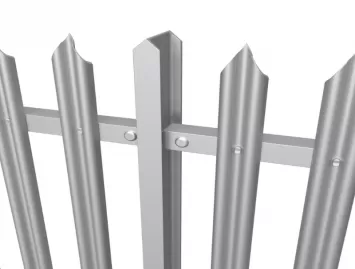
Palisade fencing is a strong, durable steel perimeter barrier widely used for commercial, industrial, and high‑security applications. With its vertical steel pales and secure design, it offers excellent protection for property boundaries, infrastructure sites, factory perimeters, and other areas where security is a priority. Palisade fencing can be installed on level or uneven ground, and, when done correctly, the installation delivers long‑lasting performance with minimal maintenance.
This guide walks you through the essential steps for installing a palisade fence from start to finish.
Before digging or assembling any components, map out the fence line:
Measure and mark the exact line where the fence will be built.
Use stakes and string to ensure the line is straight and consistent.
Check local building regulations for any height limits or permits required for fence installation.
Site preparation also includes removing obstacles such as rocks, vegetation, or debris that might interfere with digging or setting posts.
The foundation of a stable palisade fence lies in correctly spaced and solidly anchored posts:
Determine spacing based on your palisade fencing system — most panels are approximately 2.75 meters (9 feet) wide, so posts are usually spaced accordingly.
Dig holes for each post using a post hole digger or auger. Holes are typically about 600 mm (2 ft) deep and sized to fit the posts plus concrete.
Check that holes are vertical using a spirit level; this ensures posts will stand plumb when installed.
Once the holes are ready:
Position each steel post into its respective hole.
Use a spirit level to ensure the post is perfectly vertical.
Prepare concrete according to the manufacturer’s directions, and pour it into the hole around the post up to ground level.
Keep the posts braced and plumb while the concrete cures — this process typically takes 24–48 hours.
Proper post setting is critical; misaligned or unstable posts can compromise the entire fence structure.
After the posts are solidly set:
Connect the horizontal rails between each pair of upright posts.
Rails generally come in two per section — an upper rail and a lower rail — which provide the structure on which the vertical pales will attach.
Secure rails to posts using appropriate bolts (typically anti‑vandal bolts specified by the manufacturer).
Ensure rails are level as this affects the alignment and visual uniformity of the fence panels.
With the rails in place:
Position the vertical palisade pales onto the horizontal rails.
The pointed tops of the pales should face outward to deliver the intended deterrent effect.
Fasten each pale firmly to the rails with nuts and bolts. Spacing between pales should follow the fencing design specifications — commonly small enough to prevent easy climbing.
Work methodically, fixing one pale after another until the full panel section is complete.
Repeat the procedures for each fence section along the planned line:
Dig the next post hole at the correct spacing,
Set and secure the next post with concrete,
Attach horizontal rails,
Install the vertical pales.
Continue this sequence until the entire fence line is built. Ensure consistent measurements and level rails to maintain a professional finish.
Once all sections are installed:
Walk along the fence to inspect alignment and structural integrity.
Tighten any loose bolts and confirm that all elements — posts, rails, and pales — are secure.
If you included gates or other accessories like anti‑climb wire or post caps, install these according to the manufacturer’s instructions.
Palisade fencing installation requires careful planning, precision in setting posts, and attention to fastenings, but following these detailed steps can help you achieve a sturdy and secure perimeter barrier. Proper installation not only enhances security but also ensures the fence serves reliably for many years with minimal maintenance.
Latest Post
HOT PRODUCTS