When it comes to fencing horses and managing ranch land, safety, visibility, and durability are the most important factors. Among all available options, wire mesh horse fencing stands out as one of the most widely recommended and modern solutions. It combines strength, flexibility, and animal safety in a way that traditional fencing often cannot match.
Wire mesh fencing—especially no-climb or V-mesh designs—is widely considered one of the safest and most reliable fencing systems for horses.
This type of fence uses tightly woven galvanized steel wire with small openings that prevent horses from getting their hooves or heads trapped. The structure also distributes impact when a horse leans or runs into it, reducing injury risk.
There are two main types commonly used for horse properties:
No-climb mesh (rectangular 2" × 4" openings)
V-mesh (diamond pattern), which offers even stronger structural flexibility and durability
Both types are designed specifically to prevent hoof entrapment and reduce climbing or pushing behavior.
High safety level for horses of all sizes
No sharp barbs or exposed wire ends
Strong resistance to impact and leaning
Works well for both horses and mixed livestock
Can also help keep predators out
Modern agricultural guides even describe properly designed wire mesh fences as one of the safest fencing options available for horses when installed correctly.
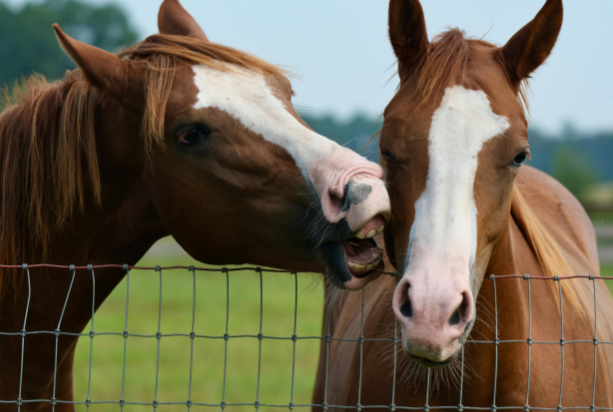
Wooden fencing is a traditional ranch favorite. It offers excellent visibility and a classic appearance.
However, compared to wire mesh, it requires more maintenance (painting, board replacement, weather protection). Horses may also break boards by kicking or leaning.
Best for: Aesthetic ranch design and visibility
Weak point: Maintenance and long-term durability
Electric fencing is often used together with other fencing types. It creates a psychological barrier rather than a physical one.
It is affordable and effective for large grazing areas but depends heavily on power supply and proper setup.
Best for: Temporary or rotational grazing systems
Weak point: Not reliable alone for high-security containment
Steel pipe fencing is extremely strong and commonly used in professional ranches and working corrals.
It requires very little maintenance and can withstand heavy pressure from livestock.
Best for: High-traffic handling areas
Weak point: Higher installation cost
High-tensile wire is a cost-effective solution for large ranches. It covers long distances with fewer posts and lower cost.
However, it is less visible, which can increase risk unless combined with tape or top rails.
Best for: Large pasture boundaries
Weak point: Low visibility and higher injury risk if poorly marked
While all fencing types have their place in ranch management, wire mesh horse fencing clearly stands out as the most balanced solution for modern horse safety and ranch efficiency.
If safety is your priority → Wire mesh fence (best choice)
If aesthetics matter → Wood fencing
If budget is tight → Electric or high-tensile wire
If maximum strength is needed → Steel pipe fencing
For most ranches today, the best solution is often a combination system, but wire mesh remains the foundation of safe and reliable horse fencing.
Latest Post