Palisade fencing is widely recognized as one of the most reliable perimeter security systems for industrial, commercial, and residential properties. Its steel construction, anti-climb features, and long-lasting durability make it a preferred choice for protecting valuable assets and restricting unauthorized access.
However, not all palisade fences are the same. Different section profiles, top designs, and security levels are available to suit various applications. Understanding these options can help property owners choose the most effective fencing solution for their needs.
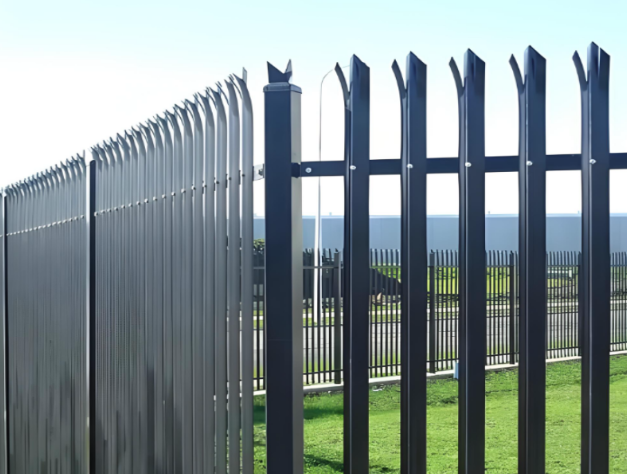
Palisade fencing is a steel security fence system made from vertical pales fixed to horizontal rails and supported by strong steel posts. The fence is designed to provide maximum visibility while creating a difficult barrier to climb or cut through.
It is commonly used for:
Industrial facilities
Warehouses
Schools
Airports
Utility plants
Residential properties
Government and military sites
The combination of strength and visibility makes palisade fencing highly effective for both security and surveillance purposes.
One of the most important decisions when selecting a palisade fence is choosing the pale section profile. The section shape directly affects the fence’s appearance, strength, and security performance.
D section pales are shaped like the letter “D.” This profile offers a smoother and more decorative appearance while still providing strong perimeter protection.
Clean and attractive design
Good structural rigidity
Cost-effective security solution
Suitable for medium-security environments
Available in various thicknesses
D section fencing is frequently installed around:
Residential communities
Schools and parks
Commercial properties
Office buildings
Sports facilities
Because of its more refined appearance, D section fencing is often selected where aesthetics are important alongside security.
W section pales feature a corrugated profile shaped like the letter “W.” This design increases strength and impact resistance, making it ideal for high-security applications.
Superior structural strength
Enhanced anti-vandal resistance
Strong anti-climb protection
Greater resistance to bending
Excellent durability in harsh environments
W section fencing is widely used for:
Factories and warehouses
Airports
Railways
Utility stations
Military facilities
High-security industrial sites
For properties requiring maximum perimeter protection, W section pales are usually the preferred option.
| Feature | D Section | W Section |
|---|---|---|
| Appearance | More decorative | More industrial |
| Strength | Medium | High |
| Security Level | Moderate | High |
| Cost | Lower | Higher |
| Best Use | Residential and commercial | Industrial and high-security |
The top design of a palisade fence significantly affects its security level and overall appearance.
Triple-point tops are the most common high-security option. The sharp points create a strong visual deterrent and make climbing extremely difficult.
Industrial sites
Warehouses
Utility facilities
Restricted-access areas
Single-point tops provide moderate security while maintaining a simpler appearance.
Commercial properties
General perimeter protection
Medium-security applications
Rounded tops are designed for areas where safety is more important than aggressive security features.
Schools
Parks
Residential areas
Recreational facilities
Square-top pales create a modern and clean visual appearance.
Decorative commercial fencing
Office buildings
Contemporary property designs
Fence height plays a major role in overall security performance.
| Security Level | Recommended Height |
|---|---|
| Low Security | 1.2 m – 1.8 m |
| Medium Security | 1.8 m – 2.4 m |
| High Security | 2.4 m – 3.0 m |
Higher fences combined with W section pales and triple-point tops provide the strongest level of perimeter protection.
Palisade fences are typically treated with protective coatings to improve weather resistance and extend service life.
Provides strong protection against rust and corrosion.
Adds color, improves appearance, and increases durability.
Offers additional environmental protection in coastal or humid conditions.
Popular colors include:
Green
Black
White
Blue
Gray
Palisade fencing remains popular because of its numerous security benefits:
Pointed pale tops and narrow gaps discourage intruders from climbing the fence.
The open steel design allows security cameras and guards to maintain clear sightlines.
Heavy-duty steel construction resists cutting, bending, and impact damage.
Galvanized and coated steel provides excellent resistance to weather and corrosion.
Compared to wood fencing, palisade fencing requires very little upkeep.
Selecting the right fence depends on several factors:
High-risk properties should use W section pales with triple-point tops and thicker steel.
Commercial and residential properties may benefit from D section fencing with decorative finishes.
D section fencing generally costs less while still offering reliable protection.
Coastal or wet environments require corrosion-resistant coatings for long-term durability.
Some areas may have restrictions on fence height or sharp-top designs.
Latest Post