Keeping horses safe inside pastures and paddocks requires fencing that is strong, visible, and designed specifically for equine behavior. A No Climb Horse Fence is widely recognized as one of the safest fencing systems for horse farms, ranches, and equestrian facilities. Its tightly woven wire mesh prevents injuries, reduces escape risks, and provides a durable long-term enclosure.
A No Climb Horse Fence is a woven wire mesh fence with closely spaced openings, designed to prevent horses from stepping through or climbing the fence. Unlike traditional field fences with large gaps, this fencing uses a tight grid pattern that keeps hooves from getting trapped.
Most no-climb fences use a 2 in × 4 in (50 mm × 100 mm) mesh pattern, which is small enough to prevent hoof entrapment while still allowing good visibility across the pasture.
This design makes the fence particularly effective for:
Horse pastures and paddocks
Breeding farms
Equestrian training facilities
Ranch and livestock enclosures
The woven structure also provides flexibility, allowing the fence to absorb impact if a horse bumps into it.
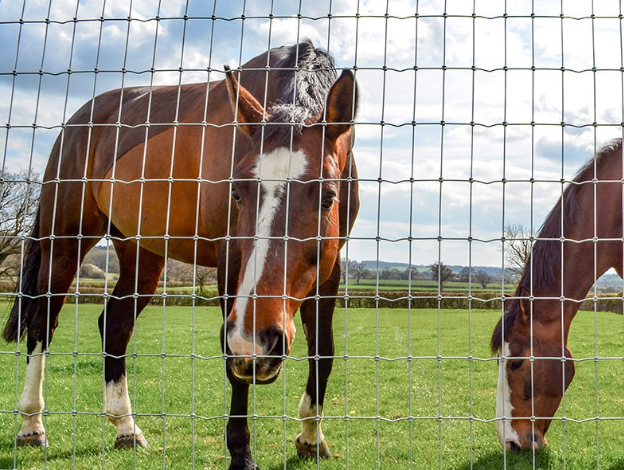
Horses often lean, scratch, or push against fences. Poorly designed fencing can lead to injuries such as trapped hooves or cuts from sharp wire. No climb fencing reduces these risks through several important design features.
The narrow mesh openings stop horses from placing their hooves through the fence, which is one of the most common causes of leg injuries in traditional livestock fencing.
Foals and smaller horses are also protected because their legs cannot slip through the wire openings.
Many no climb fences use special knot systems—such as S-knots or square knots—that create smooth wire intersections. These connections reduce the chance of scratches or injuries to the horse’s coat or skin.
The smooth surface helps prevent snagging of manes, tails, or blankets.
Woven wire fencing is strong enough to contain large animals but flexible enough to absorb impact. If a horse bumps into the fence, the mesh can flex slightly instead of breaking or causing injury.
This flexibility improves both safety and durability.
The tight mesh design does more than keep horses inside. It also helps prevent dogs, coyotes, and other small predators from entering the enclosure.
This adds another layer of protection for horses and foals.
Most high-quality no climb fences are made from galvanized high-tensile steel wire, which provides strength and corrosion resistance.
Common material features include:
Galvanized coating for rust resistance
Heavy-gauge top and bottom wires for added strength
High-tensile steel for long-term durability
Optional PVC or polymer coating for smoother surfaces and extra protection
With proper installation, galvanized fencing can last many years with minimal maintenance.
Although sizes may vary depending on the farm or project requirements, most no climb fences share similar specifications.
| Feature | Typical Specification |
|---|---|
| Mesh Size | 2″ × 4″ (50 × 100 mm) |
| Fence Height | 48″–72″ (1.2–1.8 m) |
| Wire Material | Galvanized high-tensile steel |
| Roll Length | 50 m or 100 ft rolls |
| Surface Treatment | Heavy zinc coating or PVC |
Fence height usually ranges from 4.5 to 5 feet or higher, helping prevent horses from jumping or leaning over the fence.
Proper installation is essential to maximize the safety benefits of no climb fencing.
Use sturdy posts:
Wood or steel posts should be installed at consistent spacing to maintain tension across the mesh.
Add a top rail or electric wire:
Many horse owners install a top board or electric strand above the fence to discourage horses from leaning on it.
Maintain proper tension:
The woven wire should be tightly stretched during installation to prevent sagging.
Inspect regularly:
Routine checks ensure the fence remains secure and free from damage.
No climb horse fencing offers a balance of safety, durability, and low maintenance, making it one of the most trusted fencing options for equine properties. The small mesh openings protect horses from injuries, while the strong galvanized wire structure provides long-lasting containment.
For horse owners, breeders, and farm managers, investing in a properly installed no climb horse fence creates a safer and more secure environment for horses to graze, exercise, and live comfortably.
Latest Post